Managing the storage risk of single-use vapes following their ban
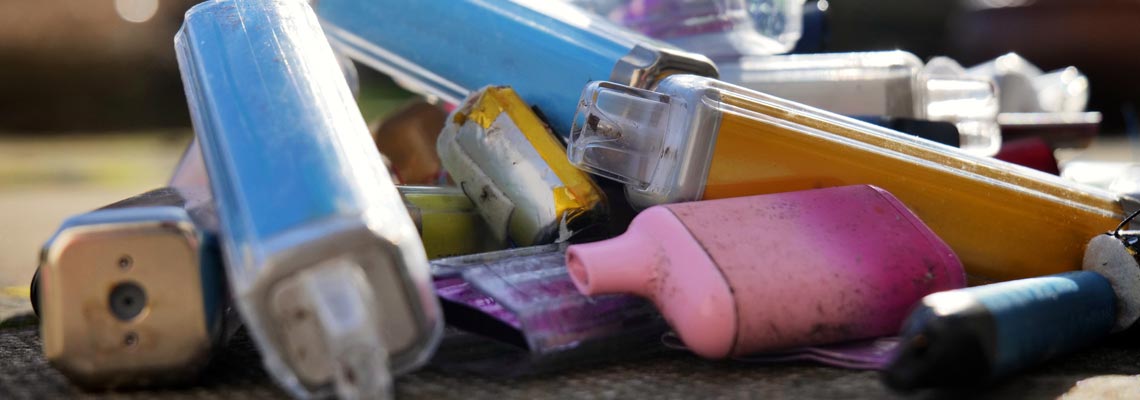
An estimated 8.2 million vapes are now thrown away every week or recycled incorrectly according to Material Focus.
When incorrectly recycled, the lithium-ion batteries in these vapes are the main reason behind the increase in the number of fires in refuse vehicles and waste recycling centres. Whilst guidance is available on how individual users can avoid vape battery fires or explosions there is a concern that recent legislation banning the use of single-use vapes could increase the fire risk at locations temporarily storing single-use vapes awaiting disposal.
Our focus in this article is to provide risk management guidance for the temporary storage of single-use vapes following the Government’s sales ban starting on the 1st June 2025.
Lithium-ion fire risks
The main cause of vape fires is when the lithium-ion battery is damaged, for example, by being crushed or pierced. This causes the battery to produce flames and eject hot fragments that can easily spread the fire to any nearby combustible materials.
There is a legal requirement for retailers selling vapes to offer customers a recycling bin for vaping products with detailed guidance available from Zurich Resilience Solutions. Alternatively, to correctly recycle vapes the Recycle Your Electricals website should be used to find the nearest vape recycler.
The ban on single use vapes
After the ban on single use vapes became effective on the 1st June 2025, local authorities have seen a sharp upturn in fires.
As a result, local authorities and waste handling centres may be faced with increased risk management requirements. Bringing together a significant quantity of lithium-ion battery products into one space raises the urgent need to consider the required controls and safety measures to reduce the risk of battery related fires happening.
Further changes to the regulations have also come into law regarding reporting obligations and a new category for vapes to ensure that the costs of collecting and treating vapes are borne by those who place them on the market.
We have put together a hierarchy of storage arrangements for single-use vapes for you to consider as part of your overall fire safety strategy.
Practical guidance for reducing fire risk in vape shops - at a glance
- Understand your building construction – especially if it is combustible or Listed
- Manage deliveries and stockrooms – inspect, segregate and store batteries safely
- Control charging inside the store – use safe equipment and supervised, limited charging
- Set up safe vape recycling – use appropriate containers and clear procedures
- Train staff – on hazards, handling, and emergency actions
Read more:
Conclusion
Due to the presence of lithium-ion batteries in vapes they represent a serious fire risk to those collecting them especially if they are mishandled. With the single-use vape ban now in force, and enforcement of a new and more prescriptive recycling requirement for all retailers, those that are responsible for confiscating or temporarily storing vapes need to carefully consider the fire risks that are being introduced and implement suitable controls.
If you would like further information or support, please contact your local Zurich contact or ZRS representative.
Featured articles

Unmasking PFAS: What businesses need to know about “forever chemicals”