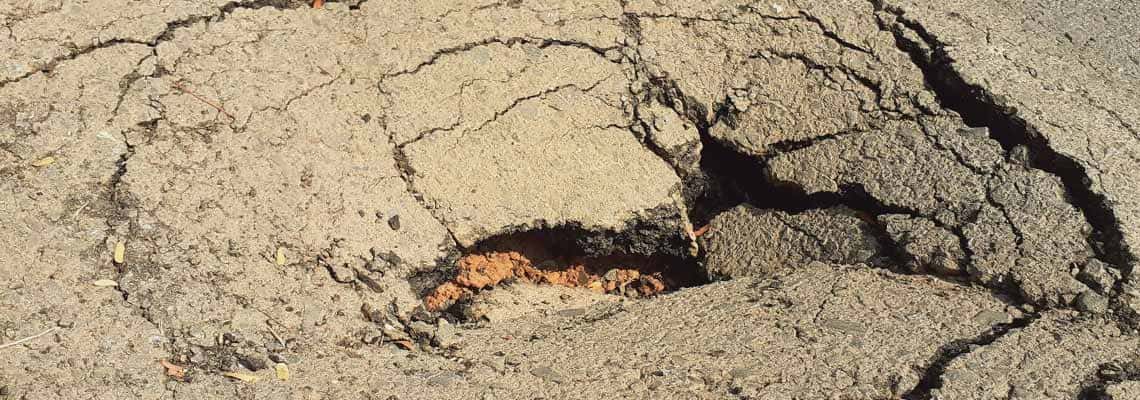
Subsidence: What we're seeing in 2026
Following one of the warmest summers on record and consecutive years of dry weather, subsidence activity has increased across the UK.
Whilst claims volumes tend to peak during the autumn months, we are already seeing signs that 2026 is developing into another significant surge year, particularly across areas with clay-rich soils.
What's driving the increase?
Subsidence is often associated with prolonged periods of hot, dry weather. As soils lose moisture they can shrink, causing movement beneath building foundations that may lead to cracking and structural damage.
What makes this year particularly notable is that ground conditions at the beginning of 2026 were already under pressure following the dry conditions experienced during 2025. Analysis indicates soil moisture deficits remained elevated for much of the year, creating a heightened risk of ground movement across susceptible regions.
The greatest concentrations of activity continue to be seen in London and across the South-East and East of England, these regions contain large areas of shrinkable clay soils, making them particularly vulnerable during extended dry periods.
What this means for customers
Subsidence differs from many other property losses because the damage often develops gradually. Cracks may not become visible until weeks or months after the weather conditions that caused the movement.
Customers may notice:
- New or widening diagonal cracks
- Doors and windows sticking
- Distortion around openings
- Cracks appearing both internally and externally
Importantly though, not every crack indicates subsidence, and professional investigation is required to establish the cause.
Increasing impact of climate change
Recent years have demonstrated a clear trend towards more frequent subsidence events. Historically, significant subsidence surges were relatively infrequent, but hotter summers and changing weather patterns are increasing the likelihood of repeat events occurring closer together.
From an insurance perspective, this means subsidence is becoming an increasingly important consideration for property owners, particularly those located in higher-risk areas or properties with nearby vegetation and mature trees.
How Zurich supports customers
Subsidence claims can be complex, but modern investigation techniques, predictive analytics and targeted remediation methods are helping improve customer outcomes.
Our approach focuses on:
- Early specialist assessment
- Identifying and addressing the root cause of movement
- Clear communication throughout the claim journey
- Proportionate and sustainable repair solutions
- Utilising technology and monitoring tools to support efficient resolution
The objective is not simply to repair visible damage, but to understand and address the underlying cause, providing customers with confidence in the long-term stability of their property.
What brokers can do
Brokers play a vital role in helping clients understand the risks associated with subsidence.
We encourage discussions around:
- Early reporting of potential damage
- Proactive property maintenance and vegetation management
- Understanding policy cover and excesses
- The importance of specialist investigation before assuming subsidence is present
By recognising early warning signs and engaging promptly, customers can often achieve a faster and more effective resolution.
Looking ahead
While weather patterns remain difficult to predict, current indicators suggest subsidence will remain a key property risk as we move through autumn and into the coming years. As climate conditions continue to evolve, proactive risk management, strong broker engagement and specialist claims expertise will be increasingly important in supporting customers and protecting properties.
We’ve put together a guide on understanding subsidence, what happens next and understanding the claims journey which can be downloaded here:
Sign up to our newsletter
Contact Zurich for brokers
Featured articles