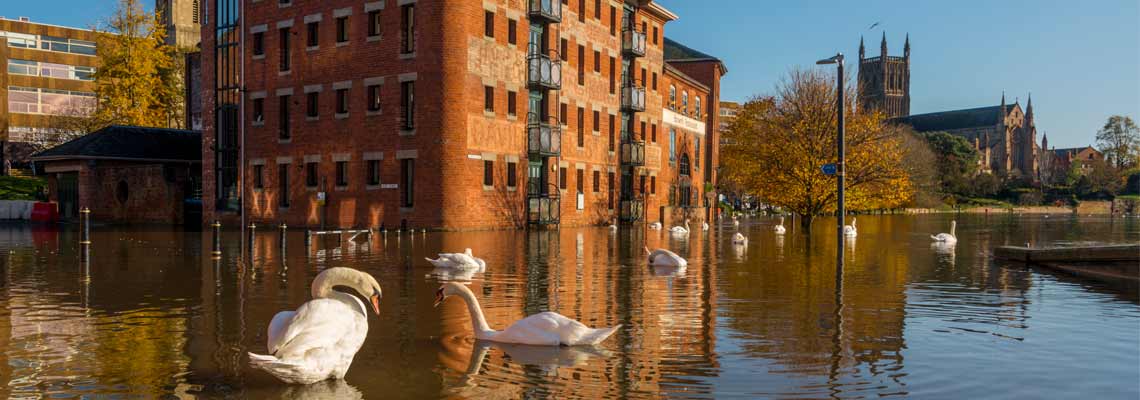
Households losing more than a month's income to flooding
The unavoidable disruption caused by serious flooding is creating a financial hazard equivalent to 13% of the annual income of some households, according to new research published today by public sector insurer Zurich Municipal.
The report, compiled by the Centre for Economics and Business Research (Cebr), examines the consequences of flooding which fall outside the safety net provided by the state and insurers.
It shows that even when households benefit from all the available support, the disruption caused by repairs and relocation creates additional, hidden costs which are felt disproportionately by different types of households.
While insurance typically covers damage to homes and belongings, the report reveals that residential households can still face financial shocks because of issues ranging from disruption to their childcare arrangements to the loss of earnings because of unpaid time off work. These are shown to total an average of £3,280 for all households, with costs rising to nearly £3,700 in cases of the most severe flood damage.
Traditional flooding costs
Traditional costs associated with flooding are calculated based on the scale of insurance pay outs and the support offered by bodies such as the NHS and employers.
The average cost for a flood affecting the interior of a domestic property is calculated to be £57,211, the majority of which is insured damages of more than £50,000.
The hidden costs of flooding
This new analysis examines flooding costs to households which are not captured by the traditional calculations by examining a survey of recently flooded households to identify both the scale and incidence of hidden costs.
The impact is not felt evenly. Although homeowners face higher absolute costs on average, of £3,662, the research finds that renters experience a greater financial burden relative to their income. Hidden flood costs equate to around 6% of median household income for homeowners, compared with 8% for private renters, rising to 13% for households in social rented housing. This represents a relative impact more than double in size to that experienced by homeowners, and it is more than a month’s income for some families.
Renters are particularly exposed due to lower average incomes, a higher likelihood of insecure work, and longer periods of unpaid absence following flooding. Social renters, on average, are displaced for longer periods and take significantly more unpaid time off work, compounding financial strain.
These figures reflect all flooding but costs are even higher in cases of severe flooding.
How the hidden costs build up
The study examines five different categories of disruption which often relate to the secondary impacts of a flood.
Expenses created by having had to relocate to a different address, such as a longer or more expensive commute, additional costs for childcare or needing additional storage for belongings.
- Loss of income because of needing to take unpaid leave, the loss of tools or equipment needed for work, disruption to side hustles such as crafting or selling second-hand goods.
- Health costs beyond those covered by the NHS, such as private counselling or over the counter medicines.
- Paying for items or services not covered by an insurance claim, for example personal toiletries, cleaning products or a professional cleaner.
- Fixing exterior damage, such as repairing fences or sheds, or replacing outdoor furniture or play equipment.
The impact on earning
One of the factors that had the biggest impact on people in social rented accommodation was the loss of earnings because of having to take unpaid time off work. There are multiple reasons for people missing work in the wake of a flood, which include:
- Handling the disruption caused by repairs or relocation
- Caring responsibilities
- Ill-health, including stress
While homeowning households reported an average of 9.7 days of missed earnings, households in social rented properties missed an average of more than 20 days, where they had to take time off.
This is likely to be because they had limited access to paid holiday and less support from their employers. Other survey evidence has shown that nearly a third of employed social tenants are on insecure, seasonal or casual work arrangements .
The financial cost of this unpaid work was calculated based on average earnings for each of the household groups. For homeowners, nearly ten days of missed work cost them £1,095. Missing more than 20 days of earnings is estimated to cost those in social rented properties £1,319.
Amy Brettell, Managing Director for Zurich Municipal and Engineering, says:
“The day the waters rise is only the start of the trauma for people who experience flooding in their homes. Our research shows that even with the safety net of insurers and the public sector doing everything they should to help, households can still face a rising tide of additional expenses in the months that follow which threaten their financial security, particularly if they’re renters or in less secure employment.
“It brings home the brutal reality – that the only way to avoid the pain and expense is for everything possible to be done to prevent a flood from happening in the first place. This is why we’re so keen to see local authorities given more certainty about the funding they can use to protect their local areas. New developments in areas of flood risk need to be avoided as much as possible, to ensure new housing isn’t creating new flood victims for the future.”
Heather Shepherd is the co-founder of support organisation Flooded People UK and a volunteer advisor to the National Emergencies Trust, having experienced flooding herself on multiple occasions. She says: “Being flooded involves months of heartache. Keeping everyday life on track while your home is being dried out and repaired is exhausting and it’s almost impossible to get through that without disruption to your job. People who are out of their homes can’t turn to their neighbours to help pick the kids up from school, and they may not be able to keep their pets with them. Sorting these issues out often comes with a price attached.
“I’ve spent thirty years meeting people who are trying to put their lives back together after a flood. A bigger, bolder plan is needed to protect them and the dozens of communities living in fear every time there’s heavy rain.”
Chair of the Environmental Audit Committee, Toby Perkins MP, said:
“When flooding hits, it devastates communities. But its impact on individuals and families is not felt evenly by all. Zurich’s important research highlights the hidden costs of flooding for social housing renters, who face some of the starkest challenges in coping with the effects of flooding.
“This research reinforces the Committee’s findings in our ‘Flood resilience in England’ report, that investment needs to be more inclusive. To make a real difference, it needs to take account of factors such as deprivation, rural isolation and health inequalities.”
How can Zurich Municipal help?
People living in property which is insured by Zurich Municipal automatically get access to Zurich Support Services. This is a free and confidential health and wellbeing service which offers up to five sessions of professional counselling to help with issues including stress, depression and anxiety. It can also offer practical support with debt and money management.
Zurich is also part of the Build Back Better scheme, which offers eligible customers up to £10,000 to install resilience measures in their property in the wake of a flood. The additional money for defences such as self-closing air bricks and flood-resistant doors is in addition to payments for a flood claim.
What needs to be done?
The findings of this research reinforce the importance of flood prevention, particularly for lower income communities. This applies to both new developments and existing properties. Zurich Municipal wants to see:
- No new developments in flood-prone areas unless there are sufficient flood prevention measures installed.
- An approach to flood defence investment which takes into account the financial vulnerability of some communities, as announced by the government in October 2025.
- A new National Adaptation Fund for local government, giving authorities more certainty about funding so they can make long-term plans to address local needs.
- Existing £5,000 flood resilience grants to be made available up front to families, instead of after a flood event, and targeted at the most vulnerable.
Sign up to our newsletter
Featured articles